Canada’s real estate, housing and infrastructure challenges are complex, interconnected, and systemic. Housing is a part of the broader affordability problem in Canada. Labour constraints, lagging productivity, aging infrastructure, and delivery inefficiencies cannot be solved in isolation. Meaningful progress requires coordinated innovation across how housing is planned, financed, built, and sustained, with a clear focus on solutions that are both environmentally sustainable and socially inclusive.
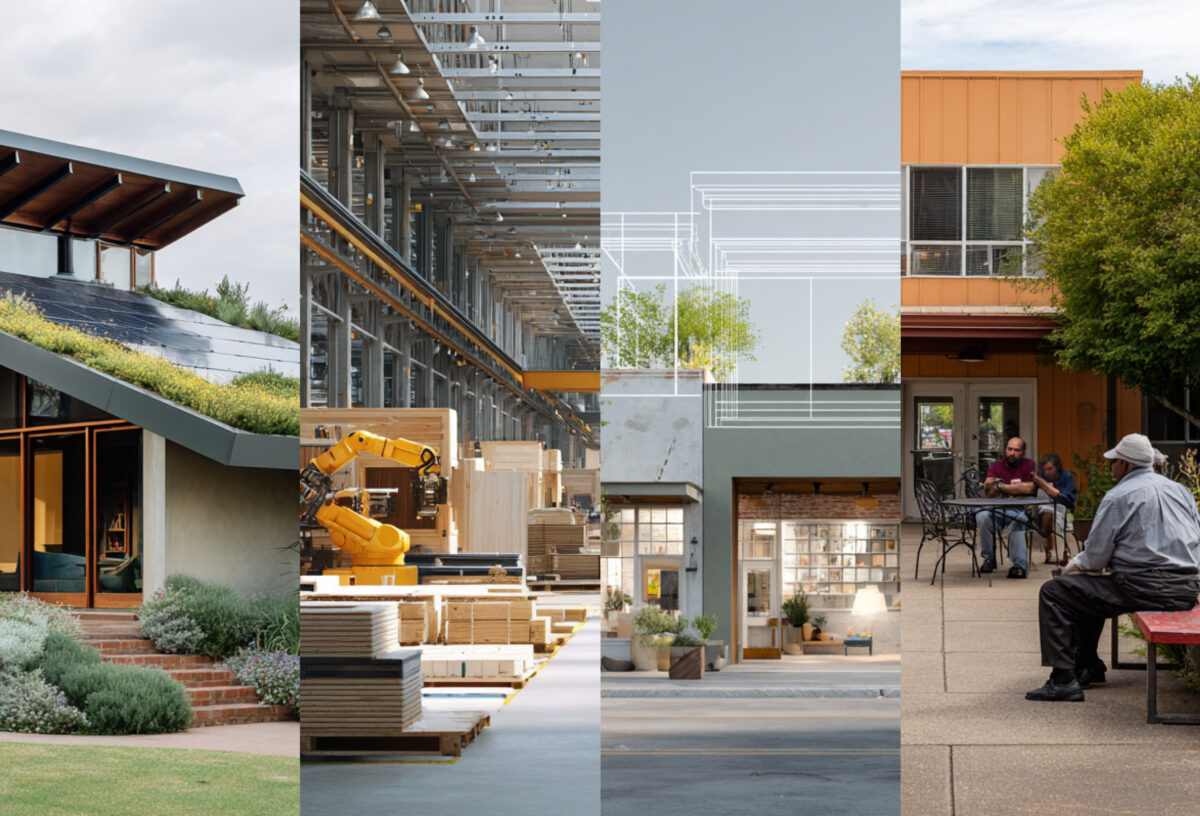
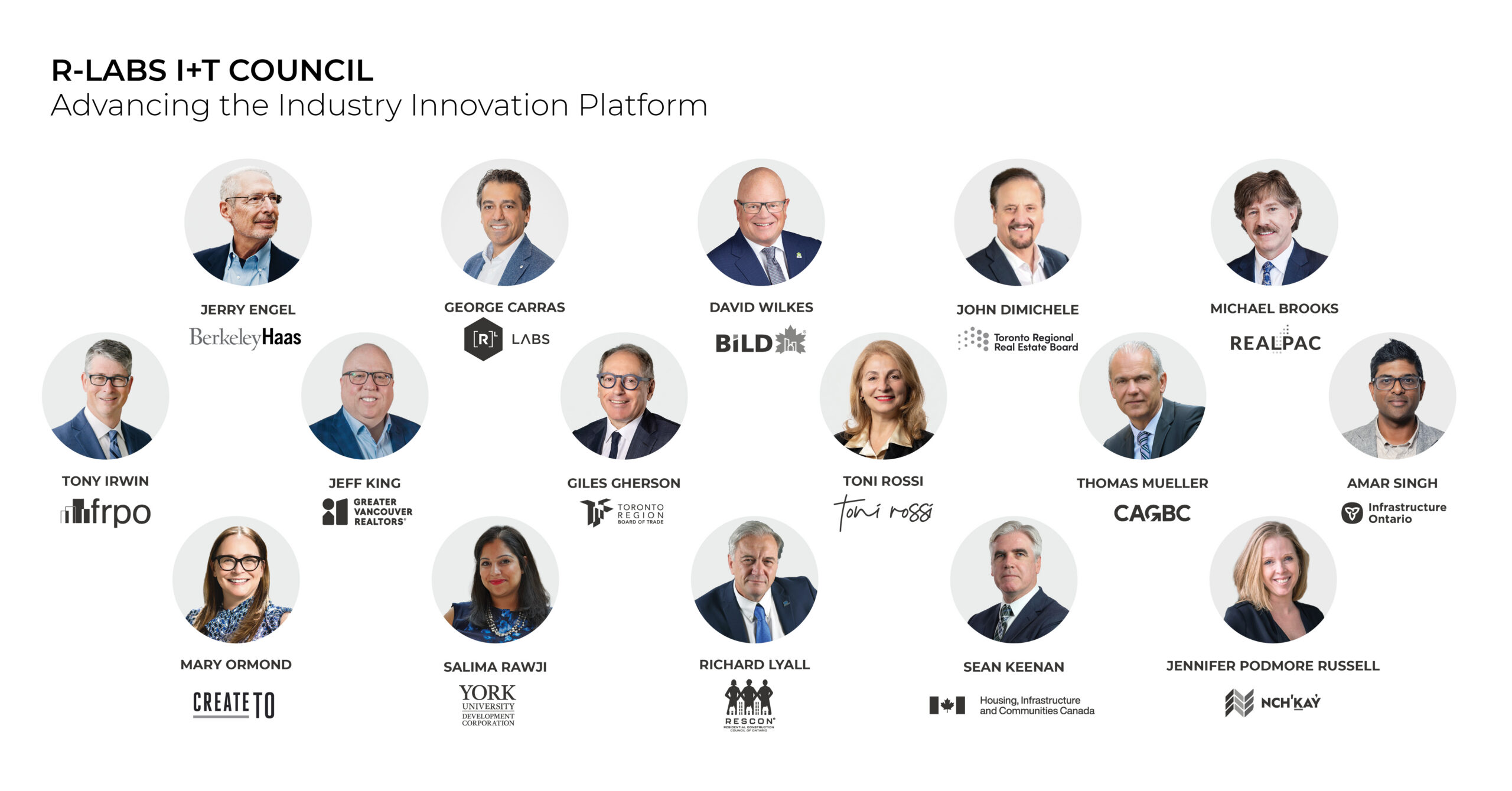
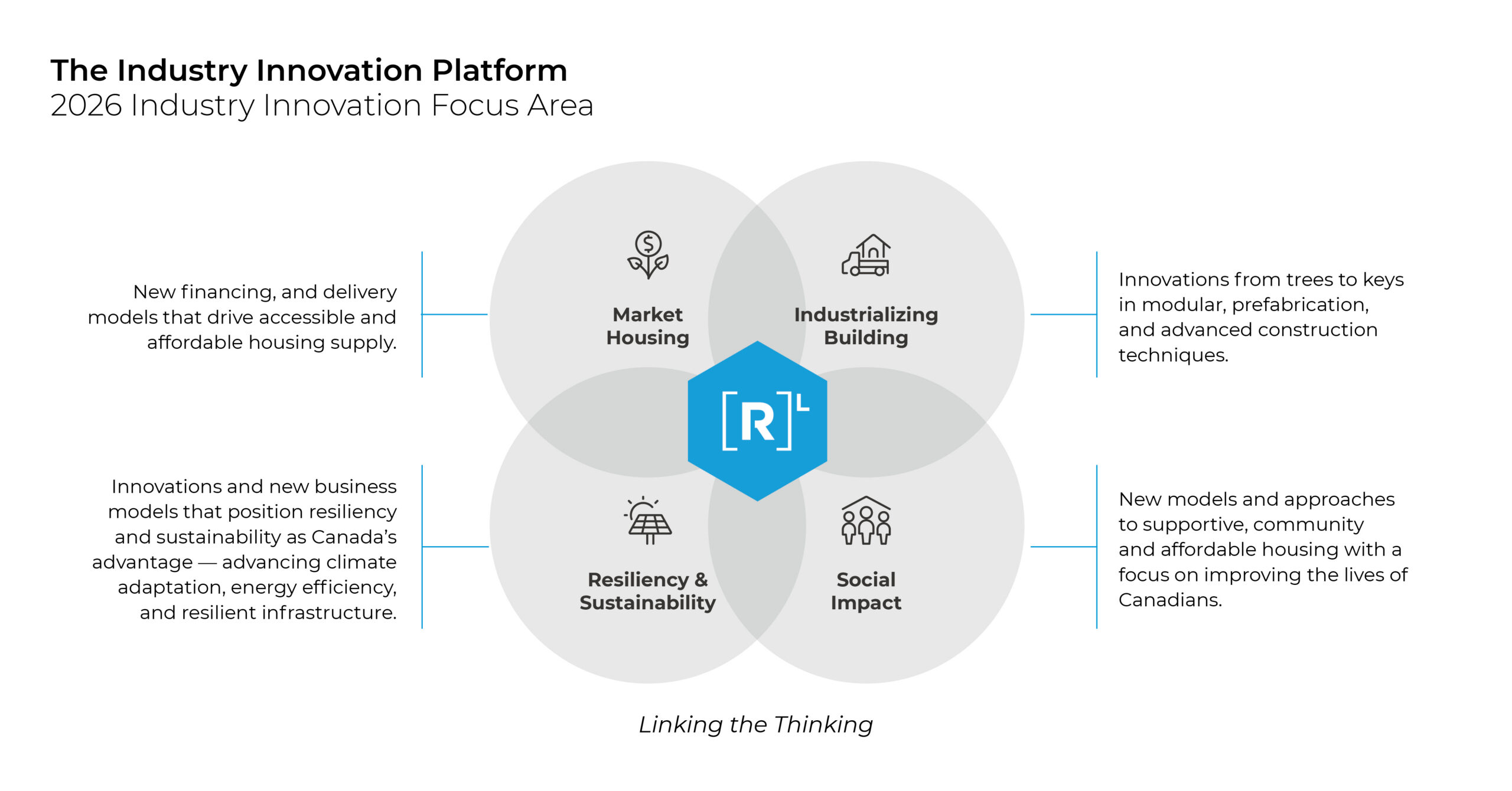
Building on the progress from the Industry Innovation Agendas of 2024 and 2025, industry leaders including the R-LABS I+T Council, have aligned on the need for a more integrated approach to housing innovation through four focus areas as priorities for advancing industry innovation: Market Housing, Industrializing Building, Resiliency & Sustainability, and Social Impact. Together, they reflect where coordinated action is most needed to address the immediate and long-term market and community outcomes.
Market Housing
Improving affordability and unlocking supply through new financing and delivery models
Affordability remains essential to addressing market housing, yet rising costs, capital complexity, and delivery risk continue to constrain supply. Traditional supply models have become ineffective in the changed environment and are no longer sufficient to meet market needs and demands.
Industry innovation is expanding who participates in market housing and its delivery. “Citizen Developers” are being created alongside established developers, small-scale operators, and community builders, creating new supply addressing specific market segment needs through new models that simplify development, unlock capital, and enable smaller projects to move forward. These approaches activate underutilized sites, supporting gentle density, and delivering housing and impact within existing communities.
At the same time, new ownership and financing structures, rental-focused strategies, and emerging capital sources are improving how risk and outcomes are aligned. Digital tools strengthen underwriting confidence, increasing transparency, creating marketplaces, and accelerating projects from concept to completion.
Who’s needed: developers, investors, lenders, government, and community builders willing to test new approaches to financing and delivery.
Industrializing Building
Reinventing how we build better in Canada
Industrializing building in Canada represents a generational opportunity to modernize how we build across all real estate subsectors—including housing—and to better align construction with other major economic areas such as infrastructure and defence, in ways that significantly increase Canadian productivity.
For housing, this requires rethinking how homes are created—from trees to keys. It means shifting away from fragmented, site-built processes toward scalable, repeatable, high-quality production. This includes the use of engineered wood and low-carbon materials upstream; advanced manufacturing, digital design, and platform-based construction during the build phase; and faster approvals, financing, and delivery downstream. Done well, this shift can deliver meaningful gains in productivity, affordability, speed, and sustainability, while building new Canadian capacity, intellectual property, and exportable manufacturing expertise.
Real progress depends on bringing partners together across forestry and mass timber, advanced manufacturing and automation, logistics, finance and insurance, utilities and energy systems, and the builders and developers delivering projects on the ground. Supported by policy frameworks that enable standardization, modernized codes, procurement innovation, and streamlined approvals—and informed by lessons from leading global markets—Canada can reduce risk, scale faster, and accelerate commercialization.
Platforms such as Assembly reflect this shift by connecting design, manufacturing, and delivery into more coordinated and repeatable systems, helping move pilots into pipelines and innovation into housing people can afford.
Who’s needed: builders, designers, manufacturers, material suppliers, financiers, insurers and government focused on redefining and scaling advanced construction techniques and improving productivity.
Resiliency & Sustainability
Making resiliency Canada’s advantage
Climate volatility, aging infrastructure, rising energy demand, and constrained resources are forcing a rethink of how resiliency and sustainability are delivered in Canada. These are no longer secondary considerations. They are becoming core inputs into how housing and infrastructure are planned, financed, and managed. The shift underway moves beyond emissions reduction toward climate adaptation, risk clarity, and long-term asset performance.
Industry innovation is accelerating this shift. Platforms that integrate climate intelligence, infrastructure data, and building performance earlier in decision-making are changing how risk is understood and managed. Property-level insights, particularly around flood and climate exposure, are influencing development, investment, and asset strategies before capital is committed. Designed in early, rather than bolted on later, resiliency becomes a competitive advantage, positioning Canada to deliver housing and infrastructure built for the realities ahead.
Companies such as NOAH Intelligence reflect this shift by applying data and analytics to support more informed, asset-level decisions. In parallel, clean power integration and energy efficiency are strengthening resilience through on-site generation, storage, and intelligent energy management at the building and community scale.
Who’s needed: asset owners, insurers, utilities, government, infrastructure planners, and investors focused on long-term performance and climate resilience.
Social Impact
Designing and scaling new models where innovation delivers measurable social outcomes
In 2026, the Social Impact focus area will centre on innovation that reshapes how capital, policy, and delivery systems work together to create inclusive outcomes at scale. Rather than treating social impact as something measured after the fact, this focus area positions it as a design principle embedded from the start in how housing, infrastructure, workforce development, and community services are planned, financed, and delivered.
Opportunity lies in new investment structures, data-driven impact measurement, and scalable platforms that enable social purpose organizations, Indigenous-led enterprises, and community innovators to move beyond pilots and into durable, repeatable systems. The aim is to support models that deliver both financial sustainability and measurable social value.
Progress will depend on cross-sector collaboration and operating models that bridge public policy, private capital, and community expertise. By leveraging social finance, blended capital, and outcome-based funding, this focus area seeks to reduce risk and accelerate the scaling of solutions that expand access to housing, economic participation, and essential services. The emphasis is on building the financial, digital, and institutional infrastructure needed to turn social challenges into long-term resilience, equity, and shared prosperity across Canada.
Who’s needed: healthcare and seniors housing operators, community organizations, government, impact investors, service providers, and public-sector leaders focused on inclusive, long-term outcomes.
Linking the Thinking and Creating a Connected System, Not Isolated Solutions
The most important insight across these four focus areas is that none of them succeed on their own. Market housing depends on new financing and delivery models enabled by industrialized production. Industrialized housing only scales when aligned with resilient infrastructure, modern policy frameworks, and long-term asset performance. Resiliency and sustainability require data, capital, and delivery systems that are embedded early, not layered on later. And social impact is strongest when it is designed into market-viable models from the start. Real innovation happens at the intersections where challenges are addressed as connected systems rather than isolated problems.
This is where R-LABS plays a unique role. As an industry venture builder and innovation platform, R-LABS is designed to connect partners, capital, policy, and technology across these focus areas, turning ideas into companies, pilots into platforms, and fragmentation into coordinated action. By bringing together leaders from real estate, construction, manufacturing, finance, insurance, energy, technology, and government alongside global partners and lessons from around the world R-LABS helps de-risk innovation and accelerate solutions that can scale across Canada and beyond.
The opportunity ahead is not incremental. It is to solve some of Canada’s greatest challenges by building some of the world’s most impactful new companies. Whether you are an industry leader, entrepreneur, investor, policymaker, or innovator, there is a role to play. We invite you to learn more, engage with these focus areas, and help shape the next chapter of housing and real estate innovation in Canada—together.